
Zulupack® Blog
Camping in the Rain | Essential Waterproof Gear & Tips
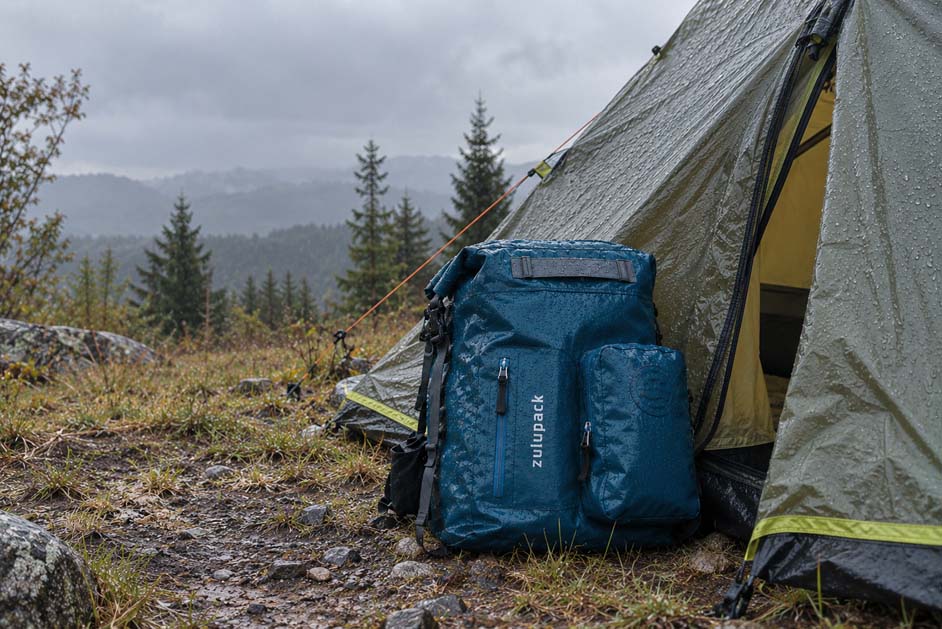
Rain doesn't have to ruin a camping trip — but it does change the way you need to pack and organise your gear. From keeping sleeping clothes dry to separating muddy shoes and wet equipment, a few simple habits can make a huge difference. Discover practical tips and waterproof camping gear that can help you stay organised, comfortable and prepared when the weather turns wet.
Wet Weather Doesn't Have to Mean a Wet Camp
You unzip the tent in the morning. The ground is wet. Your shoes are muddy. The towel you left outside is wetter than it was when you used it. And the weather forecast has quietly changed from “possible showers” to rain for most of the day.
Welcome to camping.
Perfect blue skies make beautiful photographs, but real outdoor adventures don't always follow the forecast. This is particularly true during autumn camping, when cooler temperatures, shorter days, damp ground and changing weather can all become part of the experience.
The goal isn't to keep absolutely everything away from water. That's nearly impossible. The real skill is knowing what must stay dry, what can get wet and how to keep the two separated. Get that right and camping in the rain becomes considerably easier.
1. Start with a Dry-Sleeping-Gear Rule
If you remember only one thing from this guide, make it this: your sleeping equipment must stay dry.
Wet hiking trousers are uncomfortable. Wet shoes are annoying. A wet sleeping bag on a cold night is an entirely different problem. Sleeping bags, sleeping clothes and insulating layers should therefore receive the highest level of protection in your packing system.
Don't rely exclusively on your tent to protect them. A tent can be opened during rain. Wet clothing gets carried inside. Water can enter while you're setting up or packing down.
Store critical dry equipment in appropriate waterproof camping bags or dry bags, even when it's already inside another piece of luggage. That extra layer of protection is cheap insurance against a miserable night.
2. Dry Bags Aren't Just for Kayaking
Mention a dry bag and most people immediately imagine kayaks, paddle boards and boats. Fair enough. That's where dry bags are particularly common.
But their basic purpose — keeping equipment protected from water — makes them extremely useful for camping too. A smaller dry bag can hold dry sleeping clothes, spare socks, electronics, first-aid supplies or anything else that absolutely shouldn't get wet. Larger dry bags can organise clothing or equipment within your camping setup.
Recommended: Zulupack® Tube
The Zulupack® Tube IP67 is a classic roll-top dry bag available in different capacities, making it useful for organising camping equipment according to what needs protection.
Instead of treating one large bag as a single storage space, you can create separate waterproof zones: one for sleeping clothes, one for electronics and one for spare equipment. This also means that opening one bag doesn't expose everything else to rain at the same time.
→ View Zulupack® Tube dry bags
Pro Tip: Pack Tomorrow's Clothes Before Today's Rain Starts
Don't wait until bedtime to search for dry clothes. Put your sleeping clothes and the next day's essential dry layer into waterproof storage before the weather turns bad.
When you're cold, tired and standing inside a damp tent at night, you'll be very pleased you did.
3. Waterproof Doesn't Mean Everything Belongs Together
This is one of the most common wet-weather packing mistakes. You invest in waterproof storage. It works perfectly. Then you take off your soaked jacket and put it inside with your dry clothes.
The rain didn't defeat your waterproof system. You did.
The basic rule for camping in wet weather should be: dry stays with dry; wet stays with wet.
Anything already wet or muddy needs its own place. That includes wet jackets, muddy shoes, damp towels, water shoes, swimwear and wet tent accessories. Keeping these items physically separated from clean, dry equipment makes camp organisation much easier.
4. Give Wet and Muddy Gear Its Own Space
Multi-day camping creates a problem that day trips don't: you can't necessarily wait until everything is perfectly dry before moving again. Sometimes you need to pack a damp towel. Sometimes your shoes are covered in mud. Sometimes yesterday's rain jacket is still wet when it's time to leave.
That's where separate wet-gear storage becomes extremely useful.
Recommended: Zulupack® Borneo 45L
The Zulupack® Borneo 45L is particularly practical for multi-day outdoor and water-based trips because its large external perforated zip compartment allows wet or dirty equipment to be kept separate from the clean gear stored in the main compartment.
That makes it useful for items such as wet clothing, water shoes, muddy footwear, damp towels or neoprene gear. The perforated compartment allows ventilation while, more importantly, keeping dirty or wet equipment physically separated from the contents you want to keep clean.
Pro Tip: Separate Wet Gear Before You Pack the Rest
Don't finish packing and then wonder where the muddy shoes should go. Create your wet-gear zone first. Once something becomes wet, it goes there automatically.
Simple systems work much better when you're tired.
5. Rain Usually Comes from Above. Water at Camp Comes from Everywhere.
It's easy to think that waterproof camping gear is mainly about rainfall. It isn't.
At a wet campsite, moisture comes from almost every direction. Grass stays wet long after the rain stops. Mud sticks to shoes and equipment. Condensation develops overnight. Tent surfaces remain damp. Water collects on tables, chairs and equipment. And anything placed directly on the ground can become wet from below.
That's why waterproof storage is useful even when the sky is temporarily clear. Before putting a bag down, look at the ground. A waterproof bag gives you more freedom, but avoiding unnecessary exposure is still good practice.
6. Be Careful with Tent Condensation
You can experience a wet tent without a single drop of rain entering it. Condensation forms when moisture in the air meets colder surfaces. People sleeping inside a tent add moisture simply by breathing, while wet clothing and equipment increase it further.
That means waking up to moisture on the inside of your tent doesn't necessarily mean the tent has leaked. Ventilation can help reduce condensation, depending on the tent design and conditions.
One thing you should avoid is bringing unnecessary wet equipment into your sleeping area. Keep soaked jackets, shoes and other wet gear separated wherever your camping setup safely allows it. Your sleeping area should remain your dry zone.
7. A Folding Bucket Is Surprisingly Useful at Camp
There are pieces of camping equipment everyone remembers: tent, sleeping bag, stove, headlamp. Then there are the things you don't think about until somebody brings one and suddenly everyone wants to use it.
A bucket belongs firmly in the second category.
Recommended: Zulupack® Bosco 15L Folding Bucket
The Zulupack® Bosco 15L folding bucket takes up relatively little space when packed but can perform several useful jobs around camp. Depending on your campsite and local rules, it can be useful for carrying water, rinsing muddy footwear, cleaning equipment, washing dishes, collecting water for camp tasks or providing drinking water for a dog.
Pro Tip: A Folding Bucket Is One of Those Camping Tools You Don't Think You Need — Until You Have One
Instead of walking back and forth every time you need water for an appropriate camp task, you can bring a useful quantity back to camp at once. And when the trip is over, a folding bucket doesn't consume the space of a rigid one.
Not glamorous. Very useful. Those are often the best pieces of camping equipment.
8. Mud Management Is Part of Rain Management
After hours of rain, keeping water out isn't your only challenge. Keeping mud out becomes just as important.
Create a simple transition area around your tent or shelter where practical. Remove muddy footwear before entering your sleeping space, keep dirty equipment together and don't place clean bags where muddy boots are being removed. Don't underestimate how far mud travels when it's attached to wet equipment.
If appropriate facilities are available, clean heavily soiled gear before packing it away. The cleaner your equipment is when it enters storage, the easier everything becomes when you unpack later.
9. Autumn Camping Requires More Than Rain Protection
Autumn camping can be fantastic. Campsites and trails are often quieter, temperatures can be ideal during the day and landscapes change dramatically as the season progresses.
But autumn adds several variables at once. Temperatures drop faster after sunset, days become shorter, the ground remains wet longer, morning condensation can be heavier and weather can change quickly.
This means your packing strategy needs to account for cold as well as rain. Carry appropriate insulating layers and protect them carefully from moisture. A warm layer isn't particularly useful if it's soaked.
10. Keep One Complete Set of Clothing Dry
This is a simple rule that can transform a wet camping trip: keep one complete set of clothing protected for camp and sleeping.
Not your “slightly less wet” trousers. Actually dry clothes.
Depending on conditions, that might include dry socks, a base layer, an insulating layer and sleeping clothes. Don't wear them casually around a rainy campsite if you don't need to. Treat them as your protected reserve.
When you've spent hours outside in wet conditions, changing into genuinely dry clothing can make an enormous difference to comfort.
11. Don't Forget the Headlamp
Rainy days often feel darker. Autumn days genuinely are shorter. Tasks that would be easy in daylight — pitching a tent, finding equipment, cooking or walking to campsite facilities — become considerably harder after dark.
Keep a headlamp somewhere accessible and dry, not at the bottom of a bag underneath everything else. And check the battery before leaving home.
A headlamp is one of those pieces of camping equipment that feels completely unnecessary at 2 p.m. At 8 p.m., you'll have a very different opinion.
12. Keep Frequently Used Gear Accessible
Every time you completely open and unpack your luggage in rain, you create another opportunity for water to reach equipment. Organise your camp gear according to how frequently you'll need it.
Things such as rainwear, headlamp, snacks and basic camp equipment should be accessible without excavating the entire contents of your luggage. Items you won't need until bedtime can remain deeper inside protected storage.
Think of your camping setup in three simple layers: need now, need today, need tonight. That simple distinction can make packing surprisingly efficient.
13. Cooking in the Rain Requires Extra Care
Wet weather can make cooking awkward, but don't allow convenience to override safety. Never use cooking equipment inside a tent or enclosed space unless the equipment and shelter are specifically designed and approved for that use.
Combustion can create dangerous gases, and flames introduce obvious fire risks. Follow the stove manufacturer's instructions and campsite rules. If weather conditions make cooking unsafe, change the plan.
A cold meal is disappointing. A tent fire or carbon monoxide exposure is considerably worse.
14. Protect Food from Water Too
Food often gets forgotten in discussions about waterproof equipment, but soaked packaging can become messy very quickly. Keep food appropriately sealed and protected from water.
Organising meals separately can also prevent you from opening your main clothing storage repeatedly in the rain. And remember that food storage isn't only about moisture. Where relevant, follow local campsite guidance for wildlife and food storage, as the correct approach varies enormously by location.
15. Never Pack a Wet Tent Away for Longer Than Necessary
Sometimes you have no choice. It's raining, you need to leave and the tent is wet. Pack it.
But once you reach somewhere suitable, unpack it and allow it to dry thoroughly according to the manufacturer's care instructions. Leaving a tent or other wet camping equipment packed for extended periods can encourage unpleasant odours, mildew and material deterioration.
The same principle applies to waterproof bags. After a wet trip, empty them, clean them appropriately and allow them to dry before long-term storage.
Your next adventure shouldn't begin with opening a bag that smells like the previous one.
16. What If Everything Is Already Wet?
It happens. The forecast was wrong. Rain arrived before the tent was pitched. Someone left a bag open.
At that point, stop trying to make everything perfect and prioritise. First protect anything that is still dry. Then focus on sleeping equipment, warm clothing, electronics, first-aid equipment, food where appropriate and anything essential for safety.
Wet equipment can be dealt with later. The important thing is preventing one mistake from turning into an entirely wet camp.
17. Create a Wet-Weather Camping System Before You Leave
The best time to decide where wet equipment goes isn't during a thunderstorm. Build your system at home.
A useful approach is to divide your equipment into four zones:
- Dry Zone: sleeping clothes, insulating layers, electronics and other items that must remain dry.
- Wet Zone: rainwear, damp towels, water shoes and wet equipment.
- Quick-Access Zone: headlamp, snacks, frequently used items and rain gear.
- Camp Utility Zone: cleaning equipment, folding bucket and other camp tools.
Once everything has a logical place, you spend less time searching and less time exposing equipment to rain.
18. Waterproof Gear Doesn't Make Bad Weather Safe
This distinction matters. Good waterproof camping gear can make rain considerably easier to manage, but it doesn't make every weather condition appropriate for camping.
Heavy storms, flooding, strong winds, lightning, falling branches and rapidly dropping temperatures can create serious hazards. Check forecasts and official weather warnings before and during your trip. Pay attention to the campsite itself, avoid locations vulnerable to flooding or other obvious hazards, and follow local regulations and campsite guidance.
Sometimes the smartest wet-weather camping decision is changing the plan.
Your dry bag won't be offended.
Camping in the Rain Checklist
Before leaving, make sure you've thought about:
- Waterproof storage for sleeping equipment
- Dry bags for clothing and sensitive gear
- A separate place for wet and muddy equipment
- Appropriate rainwear and footwear
- Dry insulating layers
- Spare dry socks
- Headlamp and batteries
- Food and water
- Appropriate cooking equipment
- First-aid supplies
- Weather forecast and warnings
- A plan for drying equipment after the trip
You don't need every outdoor gadget ever invented. You need a system that keeps the important things protected and accessible.
Final Thoughts
Camping in the rain isn't about defeating the weather. You're outdoors, so some things are going to get wet. The trick is making sure they're the right things.
Protect sleeping equipment and dry clothing carefully. Use dry bags for camping to organise items that must remain protected. Give wet and muddy equipment its own space instead of allowing it to contaminate everything else.
And don't overlook simple pieces of equipment that solve everyday camp problems. A waterproof storage system keeps clothes dry, a separate compartment keeps muddy footwear away from clean gear, and a folding bucket helps deal with the mud once it's there.
None of this makes rain disappear. It simply means that when you hear drops hitting the tent in the middle of the night, your first thought doesn't have to be:
What did I leave outside?
Recommended Waterproof Camping Gear
Zulupack® Borneo 45L
A large waterproof bag for multi-day outdoor and water-based adventures. Its perforated external zip compartment is particularly useful for keeping wet clothing, muddy shoes and damp equipment separate from clean gear in the main compartment.
Zulupack® Tube IP67
Classic roll-top dry bags in different capacities for protecting and organising clothing, electronics and other camping essentials that need to stay dry.
Zulupack® Bosco 15L Folding Bucket
A compact folding bucket for practical camp tasks such as carrying water, cleaning equipment, rinsing muddy footwear and other campsite jobs.
Frequently Asked Questions
How do I keep my gear dry when camping in the rain?
Separate equipment according to what must remain dry, what may become wet and what needs frequent access. Use appropriate waterproof storage or dry bags for sleeping equipment, dry clothing and sensitive items, and keep already-wet gear physically separated.
Are dry bags useful for camping?
Yes. Dry bags can protect sleeping clothes, spare layers, electronics and other equipment from water while also helping organise gear into separate protected compartments.
How do I store wet clothes while camping?
Keep wet clothing physically separated from dry equipment. A dedicated wet-gear compartment or separate waterproof storage prevents moisture and dirt from spreading to clean clothing and sleeping equipment. Don't leave wet gear sealed for longer than necessary; dry it properly when conditions allow.
What should always stay dry when camping?
Priorities depend on the trip and conditions, but sleeping equipment, insulating clothing, essential electronics, appropriate first-aid supplies and other safety-critical items generally deserve particularly careful moisture protection.
Related Articles
Hiking in the Rain: Essential Waterproof Gear for Wet Weather
Heading onto the trail from camp? Learn how to manage rain, mud and waterproof storage while hiking.
What Is a Dry Bag? Everything You Need to Know Before Your Next Adventure
Learn how dry bags work and how to choose the right one for your outdoor equipment.
Dry Bag vs Waterproof Backpack: Which One Should You Choose?
Compare two different approaches to protecting gear from water.
How to Keep Your Phone, Documents and Valuables Dry Outdoors
Protect the small essentials that can cause big problems when they get wet.
The Ultimate Hiking & Trekking Packing Guide for Every Outdoor Adventure
Build a practical packing system for day hikes and longer outdoor adventures.