
Zulupack® Blog
Best Travel Backpack | How to Choose the Right Backpack for Your Trip
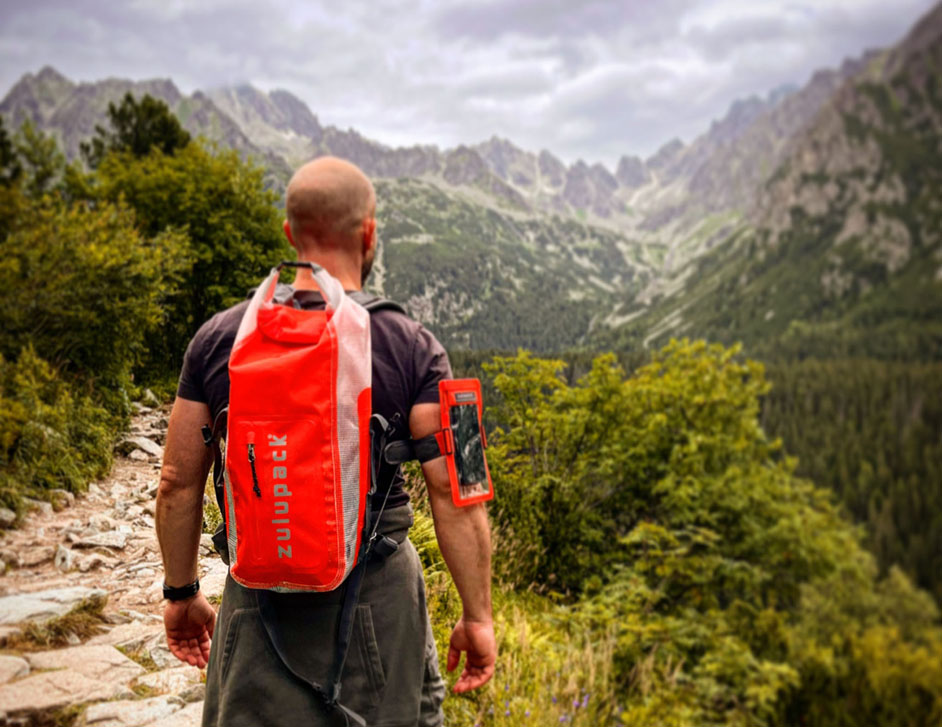
The best travel backpack isn't simply the biggest one you can carry. The right choice depends on where you're going, how long you'll be away and what you need to protect along the way. From weekend escapes and backpacking trips to longer adventures, this guide explains how to choose the right backpack size, carrying system, organisation and waterproof protection for the way you travel.
How to Choose the Best Travel Backpack for Your Next Adventure
One Backpack Doesn't Fit Every Journey
A weekend in a European city. Two weeks travelling by train. A road trip along the coast. A backpacking adventure that moves between airports, hostels and mountain trails.
They're all travel.
But they don't require the same backpack.
Finding the best travel backpack isn't about choosing the model with the longest feature list or the largest capacity. It's about finding a bag that works with the way you actually travel.
How much do you need to carry? Will you walk long distances with your backpack? How often will you need access to your equipment? Are you expecting rain, boats, beaches or unpredictable weather? Will you travel by plane?
Answer those questions first.
The right backpack becomes much easier to identify.
1. Start with the Length of Your Trip
Capacity is one of the first things people consider when choosing a travel backpack, and understandably so.
But there's a common mistake:
choosing the largest backpack you might possibly need.
More capacity usually means more temptation to pack.
For a short trip, a compact backpack encourages you to take what you actually need. For a longer journey, additional capacity becomes useful for extra clothing, equipment and supplies.
As a rough starting point:
| Backpack capacity | Typical use |
|---|---|
| 18–25L | Day trips, sightseeing, short minimalist travel |
| 30–40L | Weekends, short trips, minimalist backpacking |
| 40–50L | Longer trips, mixed travel and outdoor adventures |
| 50–60L+ | Extended travel, expeditions and equipment-heavy trips |
These aren't strict rules.
A minimalist traveller might comfortably spend a week with a 35L backpack, while someone carrying specialist outdoor equipment may need considerably more space for the same trip.
Pro Tip: Choose for Your Normal Trip, Not Your Biggest Possible Trip
If 80% of your journeys last three or four days, don't automatically buy a huge backpack because you might take a three-week trip next year.
Extra empty capacity has a funny habit of becoming full capacity.
2. Is 35L Enough for Travel?
For many travellers, 35 litres is an extremely versatile size.
It's large enough for clothing, toiletries, electronics and everyday travel equipment, yet compact enough to remain manageable when you're moving frequently.
This makes a 35L backpack particularly interesting for backpacking, weekend travel, road trips and journeys combining cities with outdoor activities.
Recommended: Zulupack Nomad 35L
The Zulupack Nomad 35L fits particularly naturally into this type of travel.
Rather than being designed only for hiking or only for city use, it's suited to journeys where environments change: travelling, walking through a city, heading towards the coast or continuing outdoors.
For travellers who prefer one versatile backpack instead of switching between several bags, 35 litres can provide a useful middle ground between mobility and capacity.

3. When Does a Larger Backpack Make Sense?
There comes a point when packing lighter isn't enough.
Longer journeys may require additional clothing, specialist equipment or gear for different climates. Outdoor-oriented travel can add another layer of equipment entirely.
That's where larger backpacks start to make sense.
A 60L travel backpack, for example, provides significantly more capacity, but it also changes the way you'll travel.
It will be heavier when full.
It takes up more space.
And you're less likely to want it on your back while exploring a city all day.
Recommended: Zulupack Nomad 60L
The Zulupack Nomad 60L is better suited to extended journeys, expeditions and trips where carrying capacity matters more than keeping your luggage extremely compact.
Think multi-week travel, overlanding or adventures where you're transporting more than a few changes of clothing.
The important point is that 35L and 60L aren't competing sizes.
They solve different problems.
Choose according to the journey.
4. Do You Really Need a Waterproof Travel Backpack?
This is one of the most important questions — and one of the most misunderstood.
If most of your travel consists of airports, taxis and hotels, complete waterproof protection may not be your highest priority.
But travel doesn't always stay indoors.
Your backpack may end up:
- on a wet railway platform,
- in the bottom of a boat,
- on a beach,
- beside a tent,
- on the deck of a ferry,
- or on your back during an unexpected downpour.
And that's before you consider what you're carrying inside: clothing, passports, chargers, cameras and other electronics.
A waterproof backpack reduces your dependence on additional rain covers and internal protection when conditions become wet.
However, don't confuse water-resistant and waterproof.
They're not interchangeable terms.
If you'd like a deeper explanation, read our guide:
→ Waterproof vs Water-Resistant vs Water-Repellent: What's the Difference?
5. Think Beyond Rain
Waterproof travel gear isn't only useful when it's raining.
Travel has a habit of putting bags near water.
Ferries, kayaking excursions, paddle boards, beaches, campsites and sailing trips are obvious examples.
Less obvious ones include luggage sitting on wet pavement while you wait for transport or a backpack being placed on damp ground during a break.
This is why the question isn't simply:
“Will it rain?”
A better question is:
“How serious would it be if the contents of my backpack got wet?”
If you're carrying a passport, electronics, important documents and your only set of dry clothes, the answer may be: fairly serious.
6. Carrying Comfort Matters More the Longer You Move
A backpack can feel perfectly comfortable for five minutes in a shop.
That tells you very little about how it will feel after two hours.
When comparing travel backpacks, consider how the load is distributed and how the backpack interacts with your body.
Shoulder straps matter.
Back support matters.
Adjustment matters.
And weight matters.
This becomes especially important when backpacking because your luggage isn't simply transported from A to B. You may carry it between railway stations, through airports, up staircases, across cobbled streets and sometimes for kilometres at a time.
The heavier your load, the more important the carrying system becomes.
Pro Tip: Test Your Backpack Loaded
Don't test a new backpack empty.
Put approximately the amount of weight inside that you expect to carry and walk around with it.
A backpack's behaviour can change dramatically once it's loaded.
7. Access Can Be Just as Important as Capacity
Imagine you've packed everything perfectly.
Then you need the charger at the bottom.
Or your jacket.
Or your passport.
Or the cable you were absolutely certain you'd put in the side pocket.
How you access your equipment matters enormously when you're travelling frequently.
Before choosing a backpacking backpack, think about what you'll need during transit and what can remain packed until you reach your accommodation.
A useful system is to divide your equipment into three groups:
Frequently needed: phone, wallet, documents, tickets, water.
Occasionally needed: jacket, charger, snacks, headphones.
Destination gear: spare clothes, toiletries and equipment you won't need until you arrive.
Pack accordingly.
It sounds simple, but it prevents a remarkable amount of pavement-side luggage archaeology.
8. Protect the Things That Can Ruin Your Trip
A wet T-shirt is annoying.
A damaged passport or phone can create a much bigger problem.
Modern travel concentrates an enormous amount of essential information on a smartphone: boarding passes, hotel reservations, navigation, banking, tickets, translation and communication.
That's why important valuables deserve their own protection rather than simply being thrown somewhere inside your luggage.
Recommended: Zulupack Phone Kit IP68
The Zulupack Phone Kit IP68 provides dedicated waterproof protection for your smartphone while keeping it accessible.
That accessibility is important.
Your phone isn't particularly useful for navigation or photography if it's buried underneath three days of clothing.

Pro Tip: Keep Critical Items in Separate Places
Don't store every essential item together.
Keep backup payment methods, copies of important travel information and other critical items appropriately separated.
If one bag is lost or inaccessible, you haven't necessarily lost everything you need at the same time.
9. What About Carry-On Travel Backpacks?
A carry-on travel backpack can make flying considerably simpler.
No waiting at baggage reclaim. Less luggage to manage. And your belongings remain closer to you during the journey.
But there's an important catch:
there is no universal carry-on size.
Airlines set their own cabin baggage dimensions and weight limits, and these can differ by ticket type as well as airline.
A backpack's litre capacity alone therefore doesn't tell you whether it qualifies as cabin baggage.
A 35L backpack may work for some journeys and airlines but exceed the permitted dimensions or weight on others.
Always check the current baggage rules of the airline operating your flight before travelling.
Pro Tip: Check Dimensions, Not Just Litres
Airlines measure the outside of your luggage.
They don't care how many litres the manufacturer says it holds.
Pay particular attention to a fully packed backpack, because soft luggage can expand beyond its nominal dimensions.
10. A Smaller Backpack Can Be the Better Travel Backpack
There's another option worth considering.
Not every traveller carries their entire luggage on their back all day.
You may have larger luggage at your hotel, campervan or accommodation and only need a smaller backpack while exploring.
For day trips, sightseeing, coastal walks or short outdoor excursions, a compact waterproof backpack can be considerably more practical.
Recommended: Zulupack Indy 25L
The Zulupack Indy 25L IP67 works well for this crossover role.
It provides enough space for typical day-trip essentials without the bulk of a large travel backpack, while its waterproof construction makes it particularly useful when the day's plans involve outdoor activities or unpredictable weather.
It's the sort of backpack that can move naturally between city, trail and water.

11. Backpacking Is About Mobility, Not Maximum Capacity
The word backpacking sometimes suggests travelling with everything you could possibly need.
In reality, successful backpacking often involves the opposite.
Every unnecessary item becomes something you have to carry.
The goal isn't necessarily to travel with the smallest backpack possible, either.
It's to find the balance between capacity and mobility.
Ask yourself:
Will I actually use this?
If the answer is “maybe”, reconsider it.
A lighter backpack is easier on your body, easier to transport and usually easier to organise.
That becomes increasingly noticeable after several days of moving from place to place.
12. Think About the Journey, Not Just the Destination
This is perhaps the easiest travel-backpack mistake to make.
You imagine yourself at the destination.
But you forget about getting there.
Suppose you're travelling to a small coastal town.
The destination sounds relaxed.
The journey might involve:
- a flight,
- a train,
- two metro connections,
- a twenty-minute walk,
- several flights of stairs,
- and a ferry.
Suddenly carrying comfort, waterproof protection and manageable size matter considerably more.
When choosing the best travel backpack, picture the entire journey from your front door to your destination — and back again.
13. One Trip Can Include Several Environments
Modern adventure travel rarely fits neatly into a single category.
You might spend Monday walking around a city, Tuesday travelling by train, Wednesday hiking, Thursday at the coast and Friday on a boat.
That's why versatile equipment can be particularly valuable.
You don't necessarily need a separate bag for every activity.
But you do need to understand where compromises make sense.
A lightweight city backpack may be excellent for sightseeing but less suitable for prolonged exposure to rain.
A huge expedition backpack may carry everything you own but become frustrating on public transport.
A technical hiking backpack may be comfortable on trails but offer features you don't need during ordinary travel.
The best choice is the one that matches the largest proportion of your actual journey.
14. Your Travel Backpack Checklist
Before choosing your backpack, ask yourself:
- How long am I travelling?
- How much equipment do I genuinely need?
- How far will I carry the backpack?
- Will I travel through wet or unpredictable environments?
- Do I need waterproof protection?
- How frequently will I access the contents?
- Am I travelling by plane?
- Does the airline have specific cabin baggage limits?
- Will the same backpack be used for outdoor activities?
- Would a smaller backpack make me pack more efficiently?
If you can answer those questions, you're already much closer to finding the right backpack than someone simply searching for the largest or most feature-packed model.
Final Thoughts: What Is the Best Travel Backpack?
There isn't one best travel backpack for every traveller.
And that's actually useful.
For shorter trips and minimalist backpacking, a 35L backpack may provide an excellent balance between capacity and mobility.
For longer journeys or equipment-heavy adventures, additional capacity such as 60L may make much more sense.
For day trips and mixed city/outdoor use, something around 20–25L can be considerably more convenient.
Then consider what your journey will expose your luggage to.
If you're travelling through unpredictable weather, spending time around water or carrying equipment that absolutely needs to remain protected, a waterproof backpack can offer an important advantage.
Ultimately, don't choose your backpack for the trip you imagine looking good in photographs.
Choose it for the airports, railway stations, rainy streets, staircases, trails, boats and kilometres between them.
That's where you'll discover whether you chose the right one.
Recommended Travel Backpacks & Accessories
Zulupack Nomad 35L
A versatile waterproof travel backpack for backpacking, weekend escapes, road trips and journeys combining urban and outdoor environments.
Zulupack Nomad 60L
A larger-capacity waterproof travel backpack for extended journeys, expeditions, overlanding and trips requiring considerably more equipment.
Zulupack Indy 25L IP67
A compact waterproof backpack for day trips, sightseeing and travel that moves between urban and outdoor environments.
Zulupack Phone Kit IP68
Waterproof smartphone protection that keeps your phone accessible for navigation, tickets, photography and communication while travelling.
→ View Zulupack Phone Kit IP68
Frequently Asked Questions
What size backpack is best for travelling?
It depends on the length and type of your trip. Around 20–25L can work well for day trips and very light travel, while approximately 30–40L offers more flexibility for weekends and minimalist backpacking. Larger capacities can be useful for extended journeys or when carrying additional equipment.
Is a 35L backpack big enough for travel?
For many travellers, yes. A 35L backpack can provide enough capacity for short trips and minimalist longer journeys while remaining easier to carry and manage than larger luggage. The right size ultimately depends on your packing style and the equipment you need.
Do I need a waterproof backpack for travel?
Not necessarily. But waterproof protection can be particularly valuable if your journey involves unpredictable weather, outdoor activities, boats, beaches or other environments where your luggage may be exposed to water.
Can I use a 35L backpack as carry-on luggage?
Possibly, but litre capacity alone doesn't determine whether a backpack qualifies as cabin baggage. Airlines use their own maximum dimensions and weight limits, which can also vary by fare. Always check the rules for your specific airline and ticket before travelling.
Related Articles
How to Choose the Best Waterproof Backpack for Hiking, Travel and Outdoor Adventures
Learn what to look for when waterproof performance is one of your main priorities.
Waterproof vs Water-Resistant vs Water-Repellent: What's the Difference?
Understand the terminology before choosing travel and outdoor equipment.
The Ultimate Hiking & Trekking Packing Guide for Every Outdoor Adventure
Heading beyond the city? Use our complete hiking and trekking packing guide to prepare your equipment.
Dry Bag vs Waterproof Backpack: Which One Should You Choose?
Discover which type of waterproof storage makes more sense for different activities and adventures.